A frigid Arctic air mass has helped create bitterly cold conditions in the Pacific Northwest for the past week. Periods of snow have accumulated in major cities like Seattle in Portland which rarely see wintry weather. Now, a strong upper trough is moving out of the Southwest, pulling the Arctic chill into the Plains. The clash of warm Gulf moisture and cold Arctic air is leading to unusual and in some areas dangerous weather to close out 2021.
Welcome to the South once again lol . . . Where it rain fish! Glad I was on my way leaving out when it started lol 🌧 🐟 pic.twitter.com/fVGTaCfs5K
— TK (@Just_Call_Me_TK) December 30, 2021
Yep. It rained fish at my house too. pic.twitter.com/NRfT8veXT9
— C’mill™️ (@camillecwarren) December 30, 2021
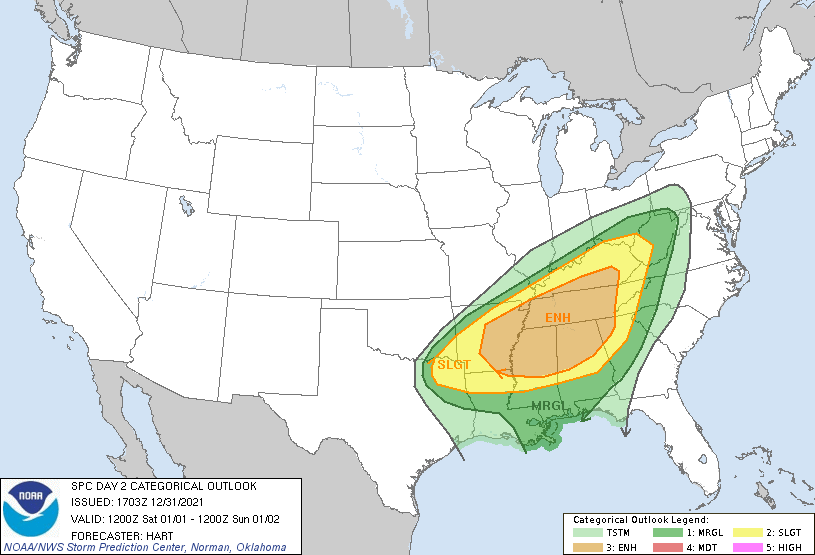
The warm, moist air has dominated the South and East for the past week. It has helped spark a few isolated severe storms, one of which spawned a brief waterspout near Texarkana, Arkansas on Wednesday. The storm produced little in the way of damage and ordinarily wouldn’t have made headlines. However, this waterspout spun across a lake, ingesting not just water but small marine life as well. The result was a rain of fish falling from the sky as the storm wound down (see video tweet above). Some residents reported as many as 30 of the unusual visitors in their yards and roofs. More widespread severe storms, including some tornadic cells, are likely on the first day of 2022, especially from the Mid-South into the Tennessee Valley (see outlook map below).
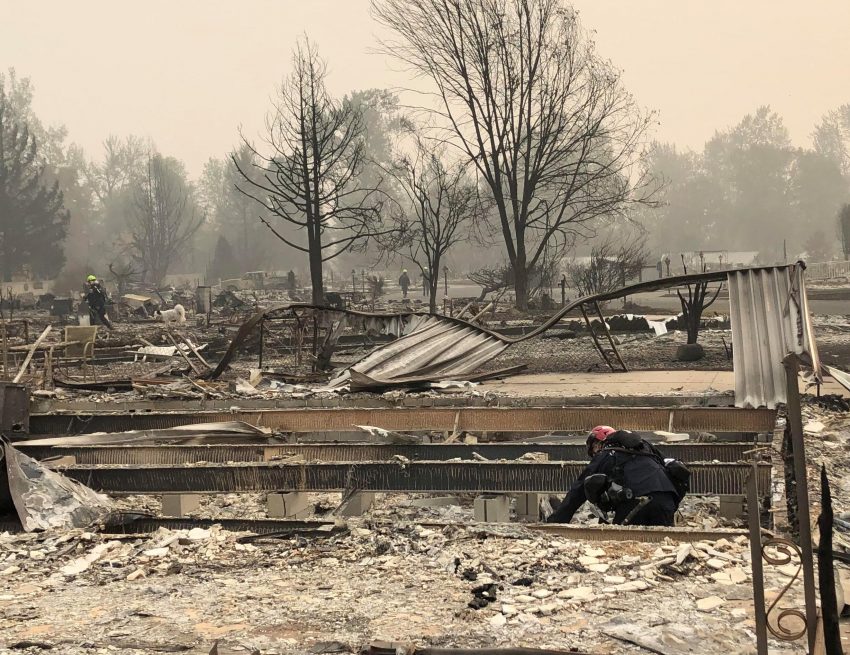
Cold air is spilling from the Mountain West into the Plains tonight. Winter storm warnings are in effect from the Central Plains to the Great Lakes. Significant accumulations of ice and snow are expected, leading to treacherous driving conditions over the holiday weekend. However, ahead of the cold front, warm and dry winds swept across the High Plains on Thursday. Gusts as high as 80-115 mph (130-185 kph) were recorded in the foothills near Denver, Colorado. Trees and powerlines were downed across the Front Range, helping to spark roaring wildfires. The fires spread quickly in a densely populated suburban area, resulting in frantic evacuations, although fortunately no casualties have been reported. Despite valiant efforts by firefighters, hundreds of homes and businesses were consumed by the flames before the winds died and the snow started to fall. Lead photo courtesy FEMA.
This video was taken by BPD Patrol Officers in Superior…E of US-36…this afternoon. Our thoughts are with our neighbors tonight who lost their homes and businesses. We continue to assist our law enforcement and fire partners as necessary. #MarshallFire #MiddleForkFire pic.twitter.com/ceydZAAfEM
— Broomfield Police (@BroomfieldPD) December 31, 2021
Close up view of the Boulder County fire and reaction from inside the Chuck E. Cheese off Marshall Rd in Superior, CO with wind gusts of 110mph. pic.twitter.com/OkBUnl8E9c
— Jason Fletcher (@SoFarFletched) December 30, 2021