More than 4,000 days have passed since the last major hurricane made landfall in the mainland US. Matthew failed to break that drought, officially making landfall in South Carolina as a category one storm on October 9. That’s cold comfort, though, for residents of the coastal southeast who are beginning recovery efforts. An even greater humanitarian crisis is unfolding across portions of the northern Caribbean, especially Haiti.
Caribbean Impacts:
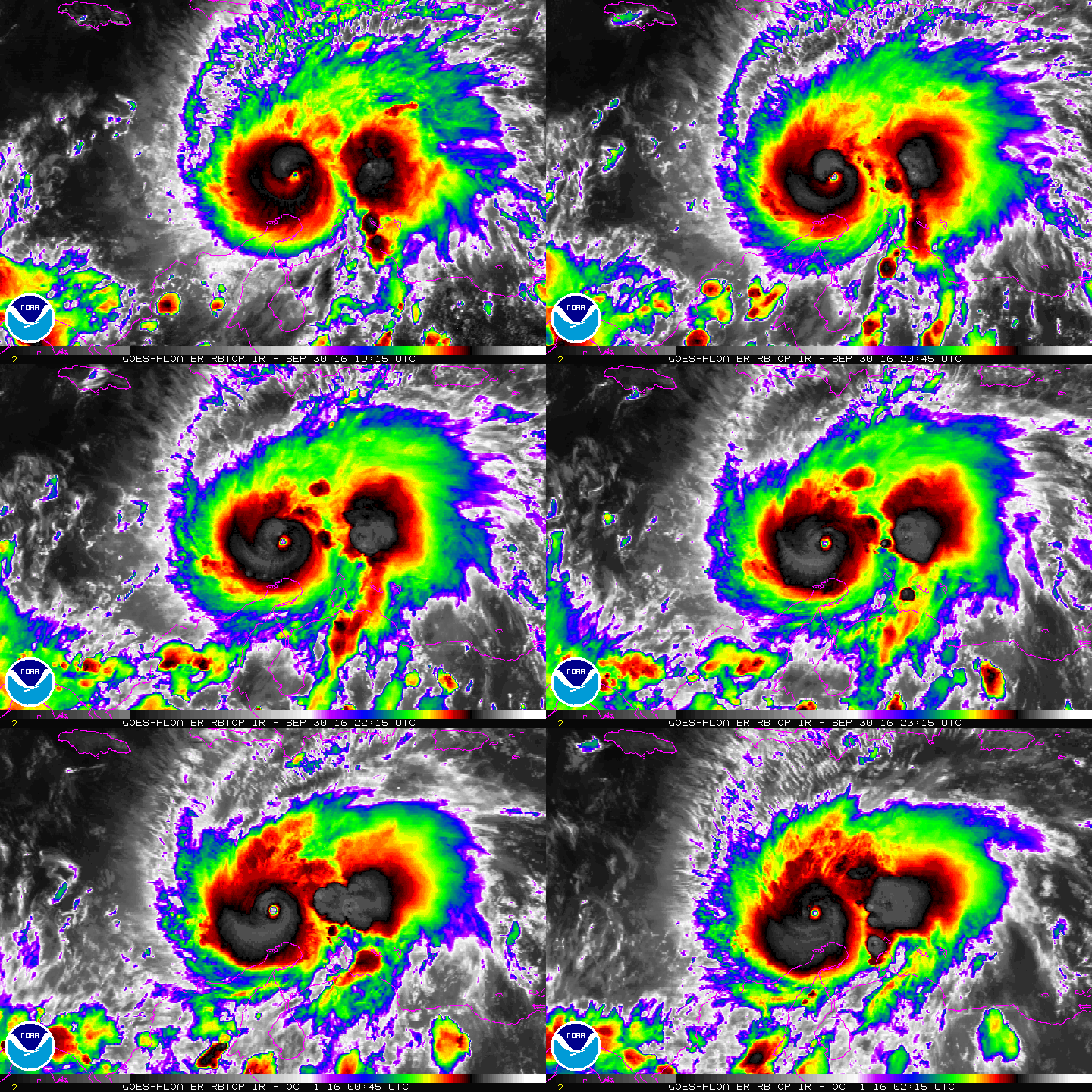
Matthew began like many Atlantic hurricanes do as a tropical wave rolling across the open Atlantic. The wave didn’t earn a name until it was well into the Windward Islands. However, after spending about 24 hours slowly gathering strength, Matthew underwent a period of rapid intensification Thursday night into Friday (Sep 29-30). The storm gained 80 mph of sustained winds in 24 hours, one of the fastest intensifications on record. It became the first Category Five cyclone in the Atlantic basin since Felix in 2007.
Models called for the suddenly mighty Matthew to take a right turn towards the Greater Antilles. The danger to poverty-stricken areas of Jamaica, Haiti, and Cuba was clear days before the storm approached. However, the tragic lack of infrastructure prevented the full amount of necessary preparation from taking place. In fact, reports indicate that some rural residents of southern Haiti didn’t even know a hurricane was coming until rains and winds started to increase.
Matthew plowed through southern Haiti and then southeastern Cuba on Tuesday, Oct 4 as a Category Four monster with winds up to 145 mph. Steep mountain ranges in parts of these countries enhanced tropical rainfall, leading to catastrophic flooding on top of destructive winds and storm surge. Communication and travel were severed for whole regions, preventing desperately needed aid from arriving for days. The death toll from Haiti alone has reportedly climbed above 1,000 people. Widespread contamination of drinking water is also leading to a fresh outbreak of deadly cholera infections.
Hurricane Matthew death toll in Haiti rises to 1,000 as mass grave burials begin: https://t.co/Ajo2l4Ub8n pic.twitter.com/WFaSyj0zT5
— Reuters Top News (@Reuters) October 10, 2016
Southeast US Impacts:
Matthew spent Wednesday and Thursday (Oct 5-6) ravaging portions of the Bahamas, including the cities of Nassau and Freeport. In the process it became the first major hurricane on record to make landfall in Haiti, Cuba, and the Bahamas. States of emergency were declared days in advance from Florida to North Carolina with evacuations ordered for coastal residents.
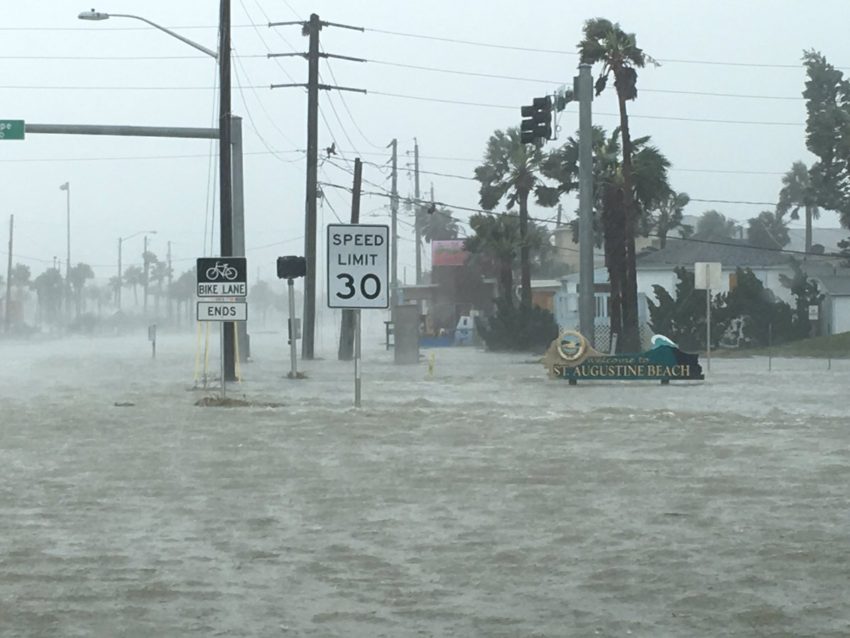
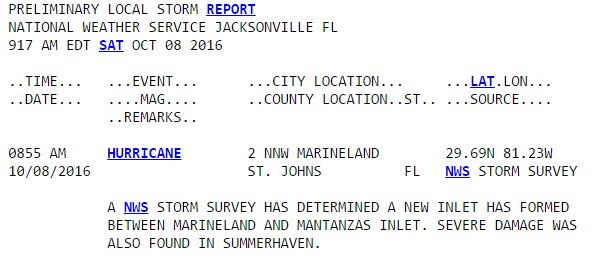
Some models projected a direct landfall on the central Atlantic coast of FL, while others kept the center just offshore. In the end Matthew stayed just offshore with the strongest part of the storm remaining east of Florida over the open water. However, surge flooding and near hurricane-force winds produced serious damage from West Palm Beach north, destroying homes, piers, and even sections of the coastal A1A highway. In some places the very shape of the coastline was changed!
Current look along A1A in St. Augustine, FL! Intense coastal flooding as #Matthew‘s eye passes nearby #FLwx #HurricaneMatthew pic.twitter.com/goffbdl4ju
— MORECAST USA (@MORECAST_USA) October 7, 2016
Incredible view of #HurricaneMatthew destruction along A1A on @WFTV pic.twitter.com/KnOv4iIdMN
— Greg Warmoth WFTV (@GWarmothWFTV) October 7, 2016
Matthew weakened steadily as it moved north, paralleling coastal Georgia before closing in on South Carolina. Matthew made landfall near McClellanville, SC, the same “ground zero” as Hurricane Hugo in September 1989. It was the first hurricane to make landfall north of Georgia since Hazel (1954); Matthew was also the first ever “M” storm to make landfall in the US. Among the more interesting results of the storm’s passage was the uncovering of Civil War-era cannonballs on Folly Beach, SC that have since been safely detonated and removed.
Matthew unearths Civil War cannonballs in Folly Beach https://t.co/66b1MangBe pic.twitter.com/9aac1hDGwq
— WYFF News 4 (@wyffnews4) October 10, 2016
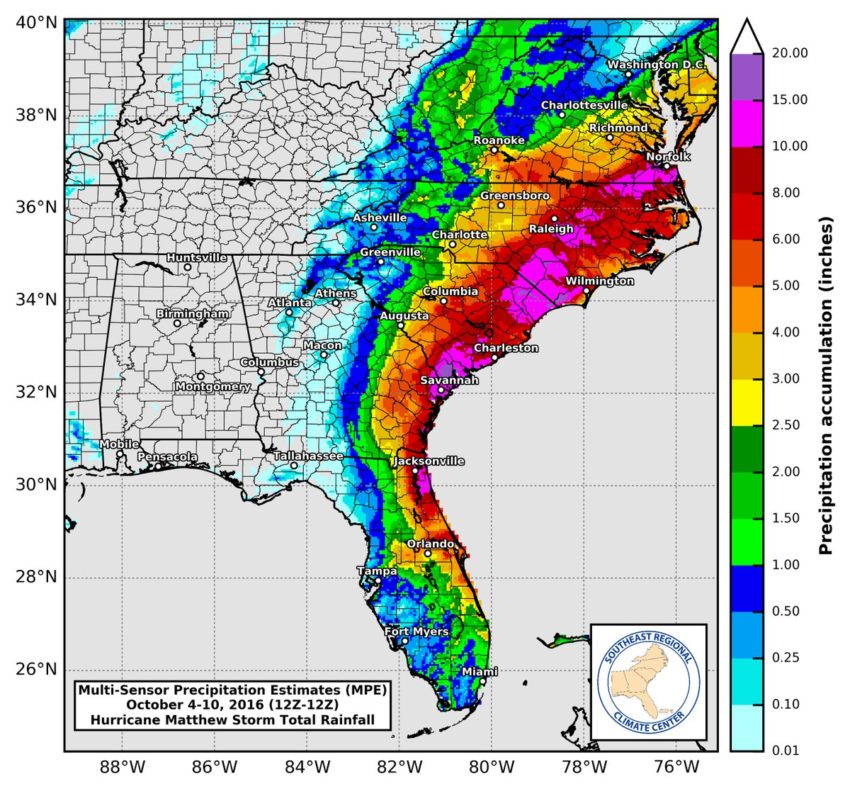
However, even as the wind capacity decreased, Matthew expanded, interacting with a cold front to the north to spread heavy rain across the eastern Carolinas many hours before the cyclone approached. Rainfall rates of 2-4 inches per hour lead to prodigious storm totals in some places as much as 12-18 inches. Indeed, the majority of deaths attributed to Matthew in the US (21 and counting) were due to freshwater flooding. Record-shattering river flooding due to runoff will continue to create major problems in the Carolinas for days to come.