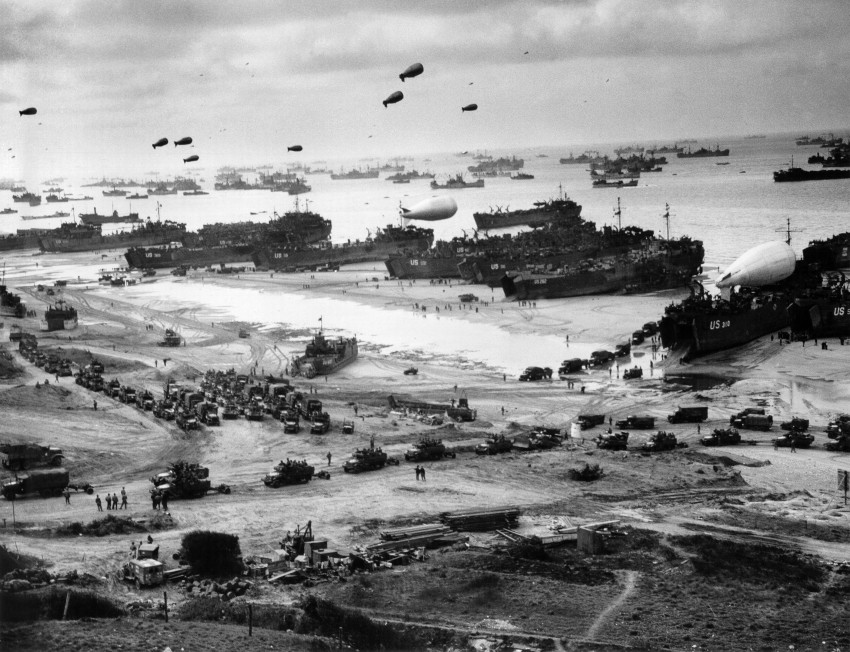
The D-Day landing took place on June 6, 1944, when Allied forces began one of history’s most important military operations. British and American meteorologists played a crucial if little-publicized role helping military planners who decided on the invasion’s launch window.
To paraphrase Supreme Allied Commander Dwight Eisenhower, the “eyes of the world were upon” the men charging ashore on a “Great Crusade” to liberate Europe from the Nazi stranglehold. The Allied troops, 160,000 strong on the first day alone to say nothing of associated vehicles and other equipment, were crossing the dangerous English Channel, prone to vicious storms and big waves which could easily topple ships and hinder planes from flying across the channel.
The chief meteorological officer, reporting directly to Allied Commander General Eisenhower, was Captain James Stagg of the UK’s Royal Air Force. Stagg was in charge of three forecasting teams, two from the UK and one American team. The desired window for commencing the invasion was between June 4-7, a favorable period when high tides would help Allied forces avoid underwater German defense traps.
Initially there was little agreement between the three forecasting teams. Observations taken on May 29, 1944 in Newfoundland suggested to British meteorologists that a storm system would arrive in the English Channel by June 5. Broken transmission codes also enabled the Brits to steal valuable open-ocean observational data from German U-boats confirming the incoming storm. Meanwhile, American forecasters thought high pressure would weaken this storm system. However, after much argument, Captain Stagg and his team of meteorologists ultimately decided that June 5 was an unfavorable day to commence the landing due to high winds, large swells, and low cloud cover. It was the right call, as the forecast verified.
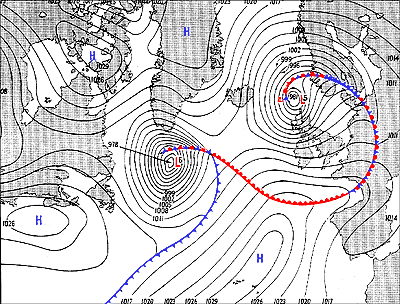
As late as June 5, the meteorology teams still didn’t completely agree on whether June 6 would be any calmer as a second storm approached the region. The British Navy team used data from a ship observation off the coast of Ireland that reported increasing pressure to suggest the next storm was being delayed and that they might get the window they needed. The British Navy and American teams were forecasting a go for D-Day, while the Met Office team still voted no. Late in the evening on the 4th and early morning on the 5th, Stagg decided in favor of American and British Navy forecast teams. He briefed the Allied high commanders that the winds would diminish and cloud bases would rise enough to allow the landing to proceed with sufficient air support.
Early on June 6, the Allies had to overcome lingering effects from the departing storm. The pathfinder planes that usually help guide paratrooper landings were hampered by low cloud cover, and ships and boats were tossed around by five to six foot waves. However, the Germans were caught flat-footed. German meteorologists and the High Command didn’t think the Allies would brave the narrow weather window, and consequently had fewer troops to man coastal defenses, diverting them instead to war games over the interior, a fatal error. In part due to timely and accurate weather forecasts, the Allies successfully launched the invasion that would spell the Third Reich’s doom, 73 years ago.