Severe Storms to Impact Mississippi Valley Today

After a severe weather outbreak Tuesday in the Great Plains that pounded several areas with damaging winds and large hail larger than softballs, the storm system will progress east, putting those living along and near the Mississippi River at risk for severe weather Wednesday.

Those on the northern end of the risk area, such as Iowa, Illinois, Missouri (including St. Louis), western Kentucky and western Tennessee (including Memphis) will have storms capable of producing large hail and damaging winds, and possibly a couple of tornadoes Wednesday afternoon into the evening hours. Farther south into Mississippi and northwest Arkansas, the primary threat from storms will be destructive straight line winds. Portions of western Louisiana already saw storms Wednesday morning that produced gusts in excess of 70 mph, and those storms are moving east.

Severe Weather Outbreak Likely across the Plains Tuesday

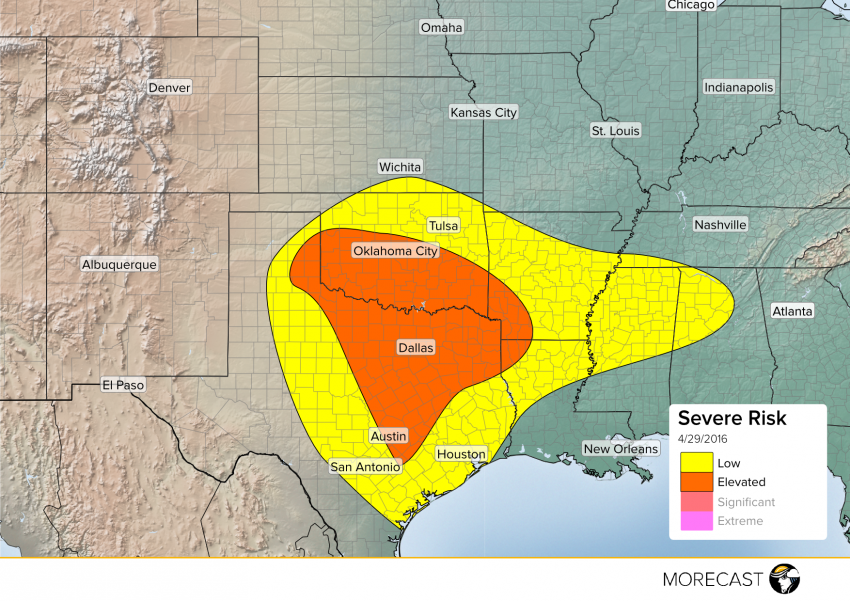
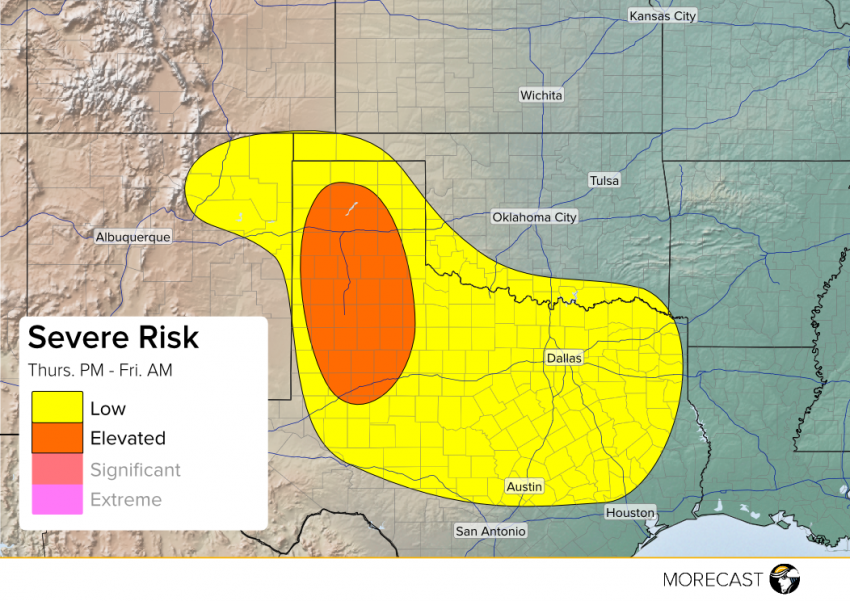
The most intense severe weather day of the season is looking increasing likely for portions of the Plains later Tuesday. A potent storm system moving out of the Rockies will tap into the rich moisture source of the Gulf of Mexico to allow thunderstorms to quickly develop along a line from Texas to Nebraska. Stronger storms across the Plains are likely to produce large hail, high winds, and tornadoes.  For a more in-depth look into the causes of the outbreak, read the technical discussion below. Also if you can do so safely, be sure to upload your storm photos to your MORECAST app so we can show the world using social media.

Read full article

Five years on: A look back at history’s largest ever tornado outbreak

It’s been five years now since the largest tornado outbreak in American history began unfolding. A total of 363 tornadoes touched down between April 25 and April 28, 2011, leaving destruction across 21 states. Four tornadoes even reached EF5 strength, the strongest on the Enhanced Fujita Scale with winds greater than 200 miles per hour. The four monster twisters in a single outbreak was more than the U.S. typically sees in a whole year. MORECAST meteorologists recap what remains the deadliest outbreak since 1925, as well as some of science behind what caused it.

Read full article