Bushfires Approach Australian Capital Of Canberra
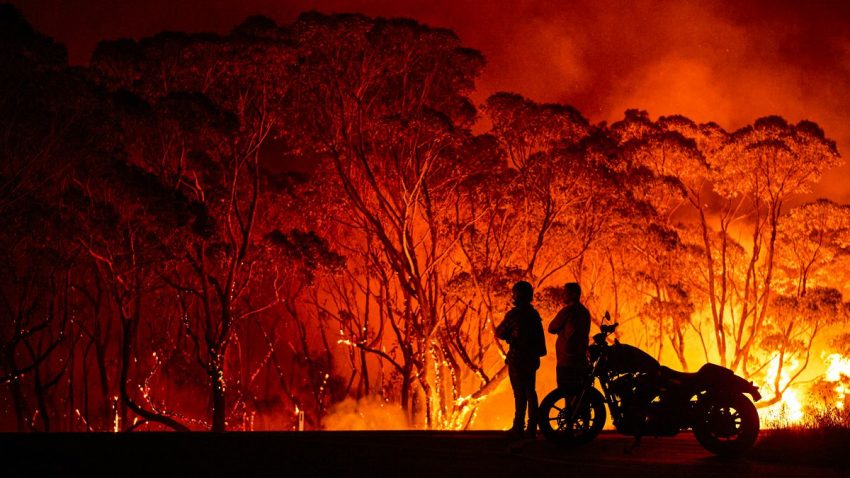
Bushfires are currently burning just south of the Australian capital city of Canberra. 35,800 hectares(88,500 acres) where burned by Saturday afternoon in the Orroral Valley in nearby New South Wales. This has prompted a state of emergency to be declared in the capital district and surrounding areas, which is the first time this has occurred since 2003. Residents in the city of 400,000 are on edge as heat, combined with dry, and windy conditions are creating the perfect setup for fire to spread rapidly. Many fear a repeat of what happened in 2003, in which 500 homes were destroyed in one day throughout the district. So far, only 20 homes have been destroyed within the district.

A total fire ban has been enacted, while officials have urged residents to fill up their sinks, buckets, and bathtubs so that they have access to safe water to drink and to extinguish flames when fires arrive. Canberra set an all time record high for February on Saturday with 42.7 degrees(109 degrees Fahrenheit). The record heat has been accompanied by strong, drying winds, which is making it very difficult for firefighters to control the flames. Isolated thunderstorms in the area have proven to be more detrimental than beneficial, as they are producing more lighting than rain, leading to additional fires being ignited. The fires themselves have been generating their own weather patterns in some cases, in which lighting and strong winds are developing within them, leading to even more fires. The extremely fire conducive conditions will last until Monday. By then, cooler temperatures, higher humidity, and less wind should assist firefighters with getting a handle on the blazes.

This latest round of fires is coming on the heels of an already deadly and destructive bushfire season for Australia. Since September, 33 people have been killed nationwide, while 3000 homes have been destroyed. 10.5 million hectares(26 million acres) have burned, and scientists estimate that over one billion animals have perished.

Major Flooding Accompanies Tropical Low Drifting Over Queensland!


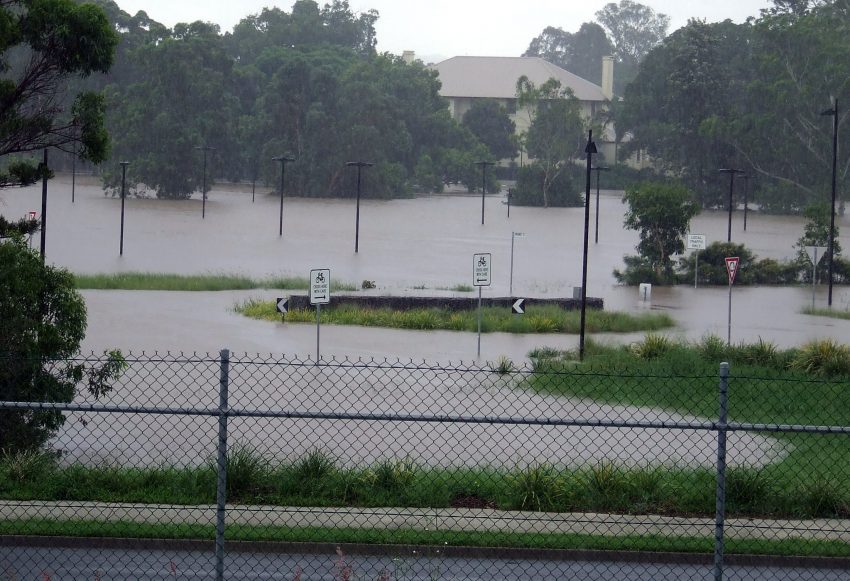
Torrential rainfall has been falling across central and northern Queensland for several days thanks to a nearly stationary tropical low. Although the low will start to move slowly away in the next few days, the tap of tropical moisture will remain open. Additional rainfall falling over oversaturated soils will lead to flooding, eventually causing significant rises in the region’s streams and rivers.


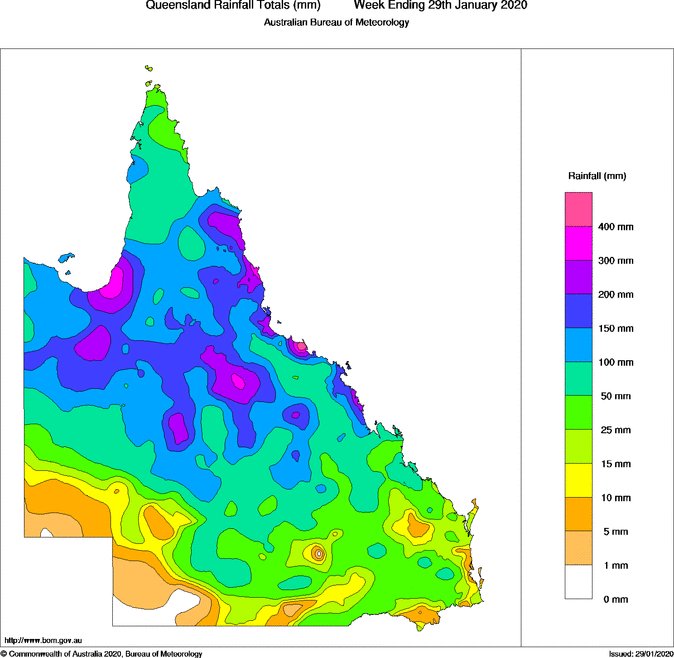
The map above shows rainfall in the past several days over Queensland. Totals in excess of 100 mm (four inches) are common over central and northern sections, with several areas having seen 300-400+ mm. Rita Island, just south of Townsville, has tallied 703 mm ( in) in the past four days! Needless to say, that magnitude of rainfall even in tropical and near-tropical climate zones has lead to serious flooding. Numerous schools, roads and bridges have been closed, cutting off some of the small communities in the outback. Rivers are in the minor to moderate flood stage and rising. The current flood event will not rival the historic rain and flooding benchmark set by the storm of February 2019, but serious impacts are still likely. Lead photo courtesy flickr contributor David Jackmanson.


Beneficial Rainfall Spreads Across Wildfire-Stricken Eastern Australia


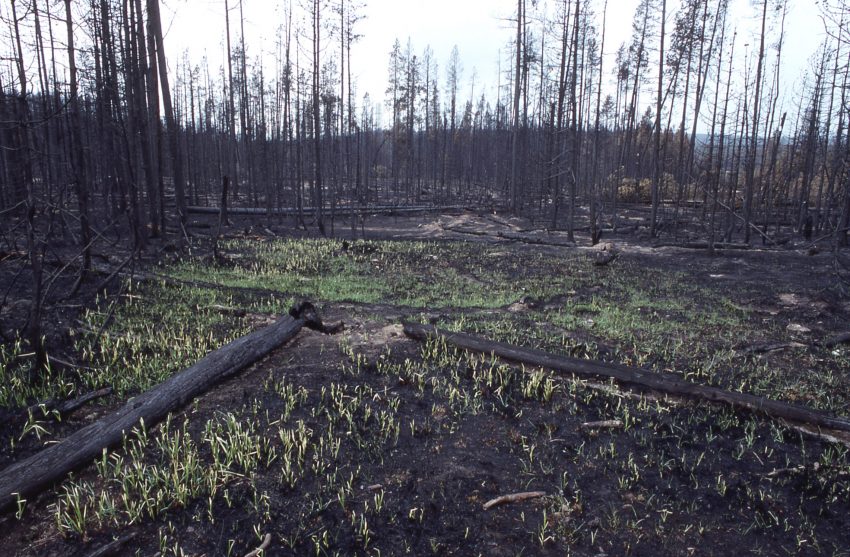
The dry, hot pattern that has contributed to devastating wildfires in eastern Australia has finally changed. Tropical moisture has swept into the region, leading to widespread showers and storms. Heavy rainfall could lead to localized flash flooding, but will also help dampen fires that are still ongoing.


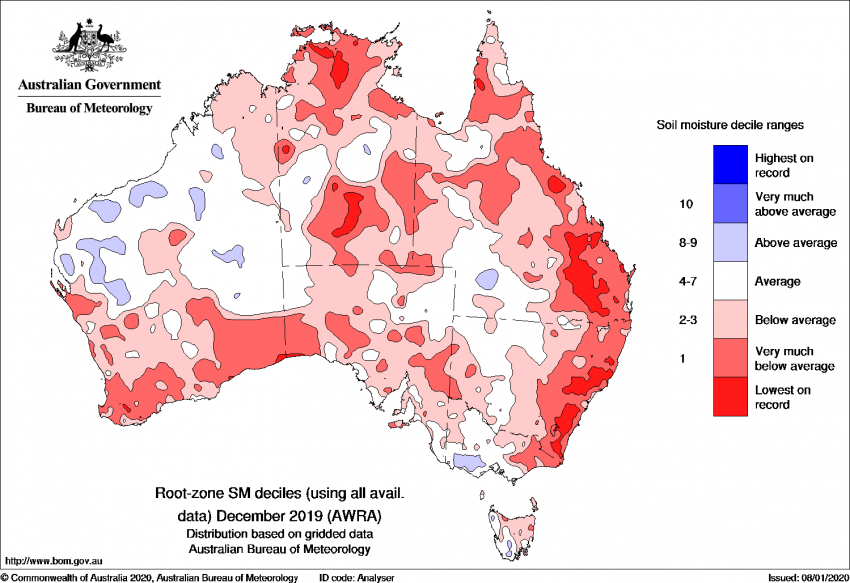
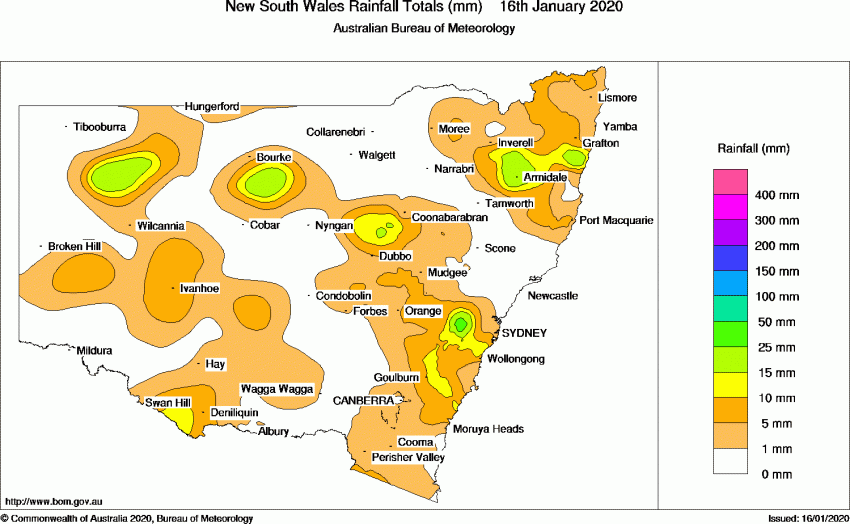
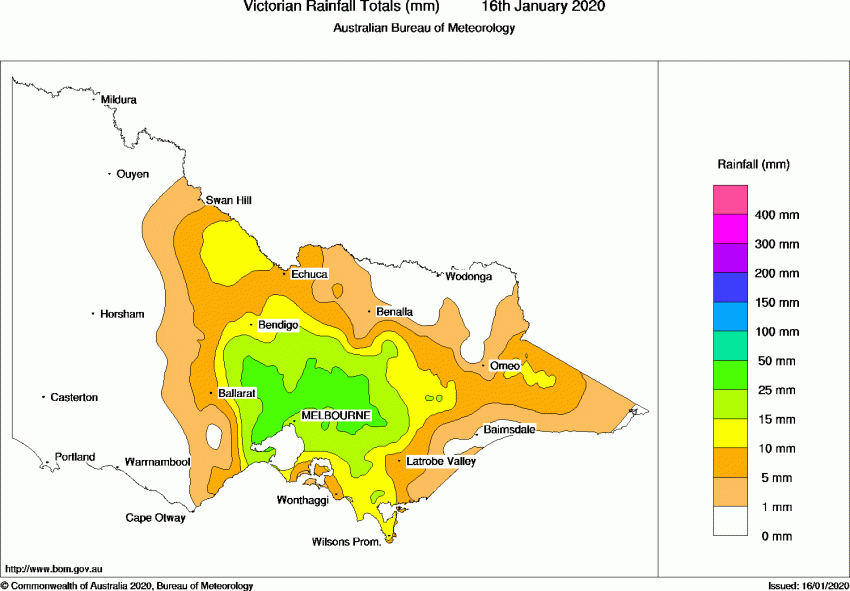
Soil moisture leading up to this week has been at record dry levels over portions of eastern Victoria, New South Wales, and Queensland (see map above). December 2019 was the driest on record in Australia. Those dry conditions persisted through the first few weeks of January over the east. Hundreds of wildfires have burned 10 million hectares of land since mid-2019, an area nearly equal to the island of Great Britain. The worst fires have affected portions of eastern QLD and VIC, destroying whole communities including thousands of homes.


The past few days have seen numerous, slow-moving, locally severe storms over portions of QLD/NSW/VIC (see maps above). On Wednesday the storms were affecting interior portions down through the Melbourne metro. One of the cells around Melbourne produced a wind gust to 110 kph and rainfall of 44 mm in only 30 minutes! Storms on Thursday have shifted eastward. Heavy rainfall rates will lead to localized flooding with recent burn areas particularly vulnerable. The ground there is baked and bare, reducing the absorption of excess water and enhancing the flooding and landslide risk. But the rainfall is also helping firefighters control and even eliminate some of the wildfires. More than three dozen were doused in the past few days due to the rain. The rain and shifting winds will also help clear smoke and dust out of the air, improving air quality conditions that had become life-threatening in the major population centers of the southeast.

Devastating Winter Storm Claims Dozens of Lives in Iran, Pakistan and Afghanistan


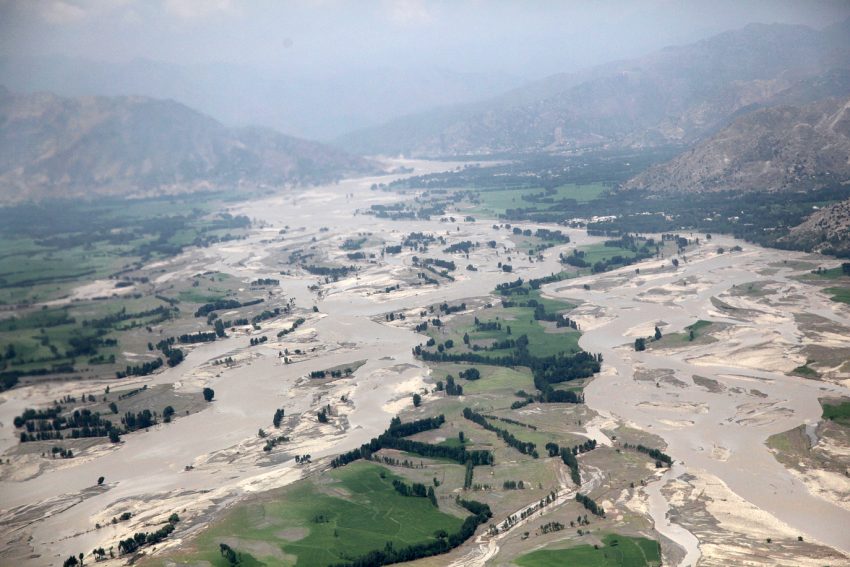
A brutal winter storm has dumped heavy rains and snows over portions of southeast Iran, southwest Pakistan and southeast Afghanistan. Heavy, wet snow accumulations up to 15 cm have overloaded roofs, leading to deadly collapses. Torrential rains have turned rivers into raging rapids, flooding vast regions and destroying hundreds of homes. At least 54 deaths have been attributed to the severe weather.


Temperatures in the Afghani capital of Kabul plunged down to minus 15 deg. Hundreds of drivers struggling to get to work were forced to abandon their cars on the snow-packed roads. Officials are scrambling to reopen highways closed by the heavy weather despite a continued threat for avalanches and landslides. The flooded rivers have compromised roadways and bridges, hampering efforts to move much-needed supplies to the devastated areas. Thousands have been evacuated from threatened communities with thousands more cutoff and isolated by the high waters.